
Follow us


Need a New Furnace? Here's What You Should Know About Costs
By Melanie Dawn
February 13, 2026
Imagine it’s the middle of winter and you’re about to be hit with the first major storm of the season. There’s no air blowing, and you don’t hear your furnace turning on. You check the thermostat only to discover the numbers are dropping. You turn the temperature up, hoping to hear the familiar sound of the motor kicking on. Instead, there’s nothing. It’s time to face the dreaded fact that your furnace isn’t working.
This May Also Interest You: HVAC System Stop Working? Try These Troubleshooting Tips Before You Call for Service
The first thing that goes through your mind is furnace replacement costs. When you take care of them and schedule routine maintenance, furnaces are reliable and tend to last between 15 and 20 years.
If your system is nearing that age or you’ve noticed a sudden increase in the number of repairs, it may be time to shop for a new unit. Replacing a heating and cooling system is probably one of the most significant investments you’ll make as a homeowner. Because it doesn’t happen often, it’s not something many people budget for. Understanding your options can help you keep your costs at a minimum and help ensure you’re getting what you need to stay warm.
On Average, How Much Does It Cost to Replace Your Furnace?
The average cost to replace a furnace can vary widely depending on several factors, such as where you live, the size unit you need and how efficient you want the system to be. As of 2026, the average cost of a new furnace is between $700 and $6,200 (CAD 958 and CAD 8,489). If you have the system professionally installed, you’ll spend approximately $3,800 to $12,000 (CAD 5,203 to CAD 16,431) on the cost of a new system, parts and labor, removal of the old unit and the cost of any permits.
When shopping for a new furnace, be sure to get several quotes. In many cases, you’ll receive a lump sum, which can make it difficult to see if you’re getting a good deal. Ask for an itemized list of costs so you can see exactly what you’re paying for each service.
Furnace Installation Costs by Fuel Type
When exploring costs, the type of fuel the system will use is one of the first things to consider.
Natural Gas Furnaces
Furnaces that use natural gas are the most common heating systems in the United States. They are efficient and cost-effective. A standard gas furnace costs between $700 and $6,200 (CAD 958 and CAD 8,489). The total cost for the system plus installation is between $3,800 and $12,000 (CAD 5,203 and CAD 16,431).
Electric Furnaces
Electric furnaces are more popular in warmer climates with mild winters or in areas where natural gas isn’t readily available. The initial cost of an electric furnace is less than that of a gas furnace, but in the long run, they cost more to operate. Electric furnaces usually cost between $1,900 and $5,600 (CAD 2,602 and CAD 7,668)
Oil Furnaces
Oil furnaces are common in the northeast. They are very reliable but tend to be more expensive than other options. If you prefer an oil furnace, you’ll need to purchase an oil storage tank and schedule regular fuel deliveries. The initial cost of an average oil furnace Is between $2,500 and $6,000 (CAD 3,423 and CAD 8,216). High-efficiency units can cost between $3,000 and $10,000 (CAD 4,108 and CAD 13,693).
Propane Furnaces
Propane furnaces are gas furnaces that have been converted to run on liquid propane. The cost is slightly higher than that of a natural gas furnace due to the cost of conversion. Propane furnaces cost between $2,200 and $5,700 (CAD 3,012 and CAD 7,805) for a standard unit and $3,500 to $7,400 (CAD 4,792 and CAD 10,132) for a high-efficiency system.
Furnace Installation Costs Based on Efficiency Ratings
The efficiency rating of furnaces determines how well the system converts fuel to heat. It’s indicated by the Annual Fuel Utilization Efficiency Rating. The Federal Trade Commission requires all furnaces to display this number in a prominent location, so consumers can make informed decisions when purchasing a new system.
Standard Efficiency (80% AFUE)
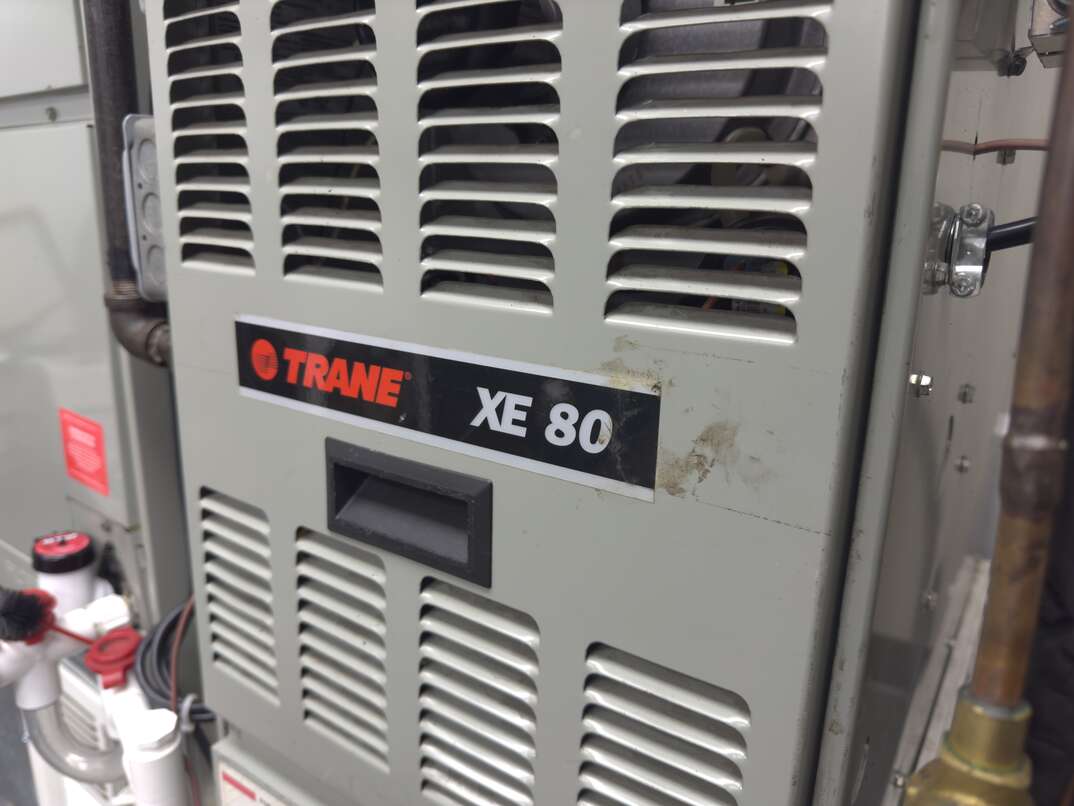
Standard efficiency units tend to be less expensive and require a metal flue. They are the most affordable option. Because these units are only 80% efficient, for every dollar you spend on fuel, 80 cents goes towards heating your home and the other 20 cents is lost.
High Efficiency (90% to 98% AFUE)
High-efficiency systems have a secondary heat exchanger that extracts heat from the exhaust gas. Very little energy is lost, making them extremely efficient. The initial cost is between $3,800 and $11,500 (CAD 5,203 and CAD 15,748), which is more, but you will pay less to heat your home throughout the unit’s lifespan.
Furnace Installation Costs by Type of Blower Motor
The blower motor delivers heat throughout your home by moving air through the ductwork. There are typically three speed options that can affect the cost of your furnace. The type of blower motor you choose can add $500 to $2,300 (CAD 684 to CAD 3,149) to the cost of a new furnace.
Single-Stage Furnace
Single-stage furnaces have only one setting. They turn on and operate at 100% capacity to heat your room to the temperature on the thermostat. Once the temperature has been reached, the system turns off. While they are the least expensive option, they are louder to operate and can cause inconsistent temperatures. They work best in mild climates.
Two-Stage Furnace
Two-stage furnaces have a low and a high setting. These systems usually operate at the lowest setting throughout most of winter when temperatures are mild. On colder days, the system operates on high.
Variable-Speed Furnace
Variable speed furnaces are the most efficient type of heating system. These units run continuously and adjust their output in tiny increments to keep the home at a more consistent temperature.
Furnace Installation Costs by System Size
BTU is the standard unit of measure needed to raise the temperature of one pound of water by one degree. To find the right size furnace, you’ll need to match your square footage to the BTU rating. Different heating zones have different BTU requirements per square foot. You can find this base amount at the Office of Energy Efficiency and Renewable Energy.
Homes in the southern part of the United States need 30 to 35 BTUs per square foot, so to determine the minimum amount of BTUs, multiply the number of square feet in your home by 30 to 35. Homes with 1,000 to 1,500 square feet need a furnace with a BTU rating of 30,000 to 52,500. Homes with 2,500 to 3,000 square feet need a furnace with a BTU rating of 75,000 to 105,000. For homes in the northernmost part of the United States, multiply the square footage by 50 and 60 BTUs.
More Related Articles:
What Factors Impact New Furnace Installation Costs?
If you’re looking to purchase a new furnace or replace an existing one, the cost is more than just the price of a new unit. There are multiple other factors that can increase the base furnace replacement cost.
Labor Costs
HVAC technicians are skilled workers who charge different rates depending on where you live. Labor costs in the middle of New York City will be significantly more than the cost of labor in a rural city in Georgia. Most technicians charge between $75 and $150 an hour.
Another determining factor is the level of difficulty. If your furnace is located in a spacious basement with easy access, you can expect to pay less for labor than if your unit is located in a tight crawl space that’s accessible only by a small hatch.
Efficiency Rating
If you’re upgrading from a low-efficiency system to a high-efficiency system some adjustments may need to be made which can affect the cost of installation.
Venting. Standard furnaces vent hot gases through a metal chimney. High-efficiency furnaces produce cool, wet exhaust that’s vented through PVC pipes. During installation, new holes will need to be cut into the side of your home to run these new intake and exhaust pipes.
Drainage. High-efficiency furnaces produce acidic water that must be removed, so you’ll need to add a condensate pump to carry this liquid to a floor drain or laundry tub.
Ductwork Modifications and Repairs
When installing a new furnace, most installers will inspect your ductwork and make sure it’s in good condition and not in need of any repairs. The cost to fix leaks is between $200 and $700 (CAD 274 and CAD 958). If the ducts have a buildup of dust and debris, you may want to have them cleaned before operating your new furnace. This will typically cost between $450 and $1,000 (CAD 616 and CAD 1,369).
If you’re adding additional heating zones to your home, the cost for new ducts is around $25 to $55 (CAD 34 to CAD 75) per square foot or $270 to $500 (CAD 370 to CAD 685) per duct run.
Code Upgrades
Building codes can change over time. If you haven’t replaced your furnace in over 10 years, a professional installer may need to pull a new permit to install the new unit. Permits can cost between $50 and $300 (CAD 68 and CAD 411), depending on the state and county you live in.
Removal of Old Unit
Old furnaces are oversized, heavy and dirty. Once a new furnace is installed, the old one will need to be hauled away to a recycling center or landfill. Most profession companies include the cost of disposal in their estimate, which usually runs between $50 to $200 or more (CAD 68 to CAD 274).
Warranty and Maintenance
New furnaces usually come with a basic warranty that covers parts for up to 10 years. However, the warranty often doesn’t cover the cost of labor to replace the parts. Many contractors offer an extended labor warranty in addition to the standard manufacturer’s warranty. You may also opt in to receive an annual service plan that covers regular maintenance and priority scheduling. Comprehensive maintenance plans usually add $150 to $500 (CAD 205 to CAD 685) to the cost of a new furnace.
Time of Year
Finally, the time of year you choose to purchase your new furnace can impact the overall cost. If your existing furnace quits in the middle of a snowstorm when repairmen are needed, you can expect to pay more for the service. If you plan to replace your furnace in the fall or spring before extreme temperatures hit, you may be able to secure a deal and take advantage of the manufacturer’s rebates.
View Plans in Your Area
Follow us
Popular

Apr 11, 2026

Get the latest news, tips and promotional messages, including special offers.